Modrić's World Cup Curtain Call
At 40 years old, Luka Modrić played his final World Cup match as Croatia crashed out to Portugal. After 203 caps and four tournaments, the captain who led his nation to a final and a third-place finish walks off the World Cup stage for the last time.
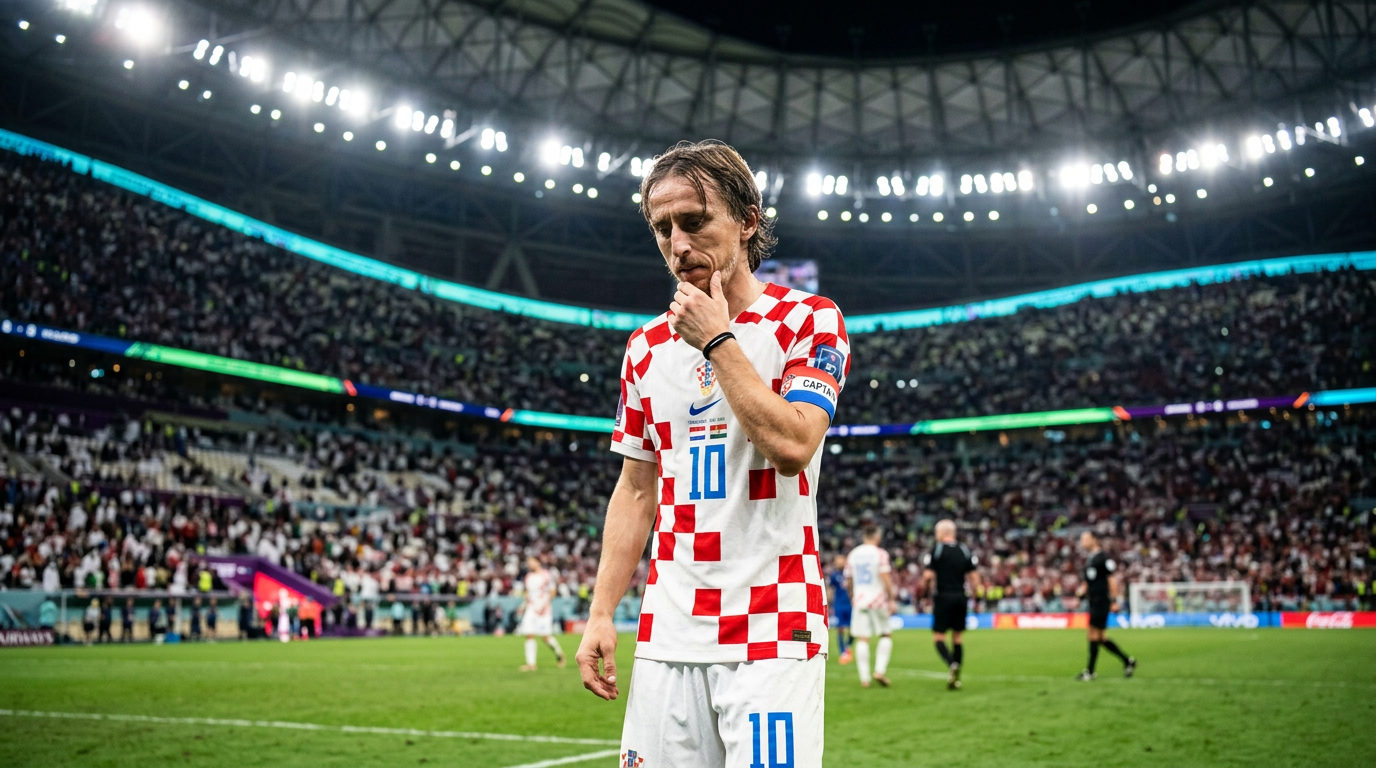
- Luka Modrić, 40, played his last World Cup match in Croatia's 2-1 loss to Portugal in the Round of 16 in Toronto
- Modrić retires from international football after 203 appearances for Croatia, debuting in March 2006 at age 20
- He captained Croatia to the 2018 World Cup final (runners-up) and 2022 third place, plus 2023 Nations League runners-up
- Modrić and Cristiano Ronaldo became the oldest players ever to feature in a World Cup knockout match, surpassing Peter Shilton's record
- The midfielder's club future remains uncertain after a season with AC Milan, who missed Champions League qualification
At 40 years old, Luka Modrić played his final World Cup match as Croatia crashed out to Portugal. After 203 caps and four tournaments, the captain who led his nation to a final and a third-place finish walks off the World Cup stage for the last time.
The Numbers Behind the Legend
- International caps203
- World Cups played2006, 2014, 2018, 2022
- Age at final match40 years
- Captain since2016
- Best World Cup finishRunners-up (2018)
- Final scorelineCroatia 1-2 Portugal
The End of an Era
The whistle blew in Toronto, and with it, an era closed. Luka Modrić, the man who had carried Croatia on his slight shoulders for nearly two decades, walked off a World Cup pitch for the last time. At 40, he had just become the third-oldest outfield player ever to feature in a World Cup match—behind only Roger Milla (42 years, 39 days) and his opponent that night, Cristiano Ronaldo (41 years, 132 days).
Together, Modrić and Ronaldo broke another record in this Round of 16 clash: they became the oldest players to ever compete in a World Cup knockout match, surpassing England's Peter Shilton, who held the mark from the 1982, 1986, and 1990 tournaments. It was a fitting stage for a farewell—two legends, both defying time, both refusing to let go until the very last moment.
Portugal won 2-1, aided by a VAR-awarded penalty, and Croatia's run ended. The final scoreline hardly tells the full story of what Modrić meant to this team. Since his debut in March 2006 at just 20 years old, he never left the squad. Year after year, his influence grew. By 2016, when right-back Darijo Srna stepped away from international duty, Modrić inherited the captain's armband—and with it, the responsibility of leading a nation that punches far above its weight.
Two Tournaments That Defined a Generation
Modrić captained Croatia through four World Cups, but it was the last two that elevated him from star to icon. In 2018, he orchestrated one of the tournament's great underdog runs, guiding Croatia all the way to the final in Moscow. They fell to France, but Modrić's performances earned him the Golden Ball as the tournament's best player—a rare honor for a midfielder, and rarer still for a player from a nation of just four million people.
Four years later in Qatar, at 37, he did it again. Croatia secured third place, becoming only the second team in history to reach the World Cup semifinals in consecutive tournaments (after Germany in 2006 and 2010). Between those two campaigns, they also reached the 2023 UEFA Nations League final, falling to Spain but proving once more that Modrić's Croatia was no fluke.
Those campaigns weren't just about results—they were about identity. Modrić embodied resilience, elegance, and an almost stubborn refusal to accept limitations. He made Croatia believers, not just in their national team, but in what a small nation with the right players could achieve on the world's biggest stage.
What Comes Next
Modrić confirmed his retirement from international football after the World Cup, but his club future remains unresolved. He spent the 2025-26 season with AC Milan, and his contract renewal is now under discussion—complicated by Milan's failure to qualify for the Champions League. At 40, even a player of Modrić's caliber faces questions about whether another season makes sense.
For Croatia, the question is even harder: who replaces irreplaceable? Modrić wasn't just the captain; he was the metronome, the playmaker, the calming presence in chaos, the man who raised his level when it mattered most. Finding the next Modrić isn't the task—there isn't one. The task is building a team that can win without him.
Modrić's World Cup Journey
2006 Germany (Debut at 20)
Modrić's first World Cup. Croatia exited in the group stage, but the young midfielder from Dinamo Zagreb had arrived on the global stage.
2014 Brazil (Group stage exit)
By now at Real Madrid, Modrić was a star—but Croatia couldn't escape a tough group. The breakthrough was still four years away.
2018 Russia (Runners-up, Golden Ball)
The tournament that changed everything. Modrić led Croatia to the final, won the Golden Ball, and cemented his legacy as one of the game's greats.
2022 Qatar (Third place at 37)
Defying age and expectations, Modrić captained Croatia to another semifinal and a bronze medal. Back-to-back top-four finishes—unprecedented for a nation this size.
2026 North America (Final bow at 40)
Eliminated by Portugal in the Round of 16. Modrić became the third-oldest outfield player in World Cup history and co-holder of the knockout stage age record. The end of an era.
FAQ
How many World Cups did Luka Modrić play in?Modrić played in four World Cups: 2006 (Germany), 2014 (Brazil), 2018 (Russia), and 2022 (Qatar). He reached the final in 2018 and finished third in 2022, leading Croatia to back-to-back semifinals—a historic achievement for a nation of four million.
What record did Modrić and Ronaldo break in this match?In the Croatia vs. Portugal Round of 16 match, Modrić (40) and Cristiano Ronaldo (41) became the oldest players ever to compete in a World Cup knockout match, surpassing England goalkeeper Peter Shilton, who held the record from the 1980s and early 1990s.
Will Modrić continue playing club football?Modrić has confirmed his retirement from international football but is still evaluating his club future. He played the 2025-26 season with AC Milan, and his contract renewal is under discussion—though Milan's failure to qualify for the Champions League complicates matters.
Who will replace Modrić as Croatia's captain and playmaker?That's the question Croatia now faces. Modrić was captain since 2016 and the heartbeat of the team for nearly 20 years. There's no direct replacement for a player of his caliber—Croatia will need to rebuild its identity around a new generation rather than search for the next Modrić.