CR7's Secret Weapon Isn't a Watch—It's a Recovery Coach on His Wrist
Cristiano Ronaldo was spotted wearing what looked like a watch during warmups before facing Croatia. It's actually a Whoop—a screenless, subscription-only fitness tracker that scores his recovery daily and tells his team whether he can train hard or needs to dial it back.
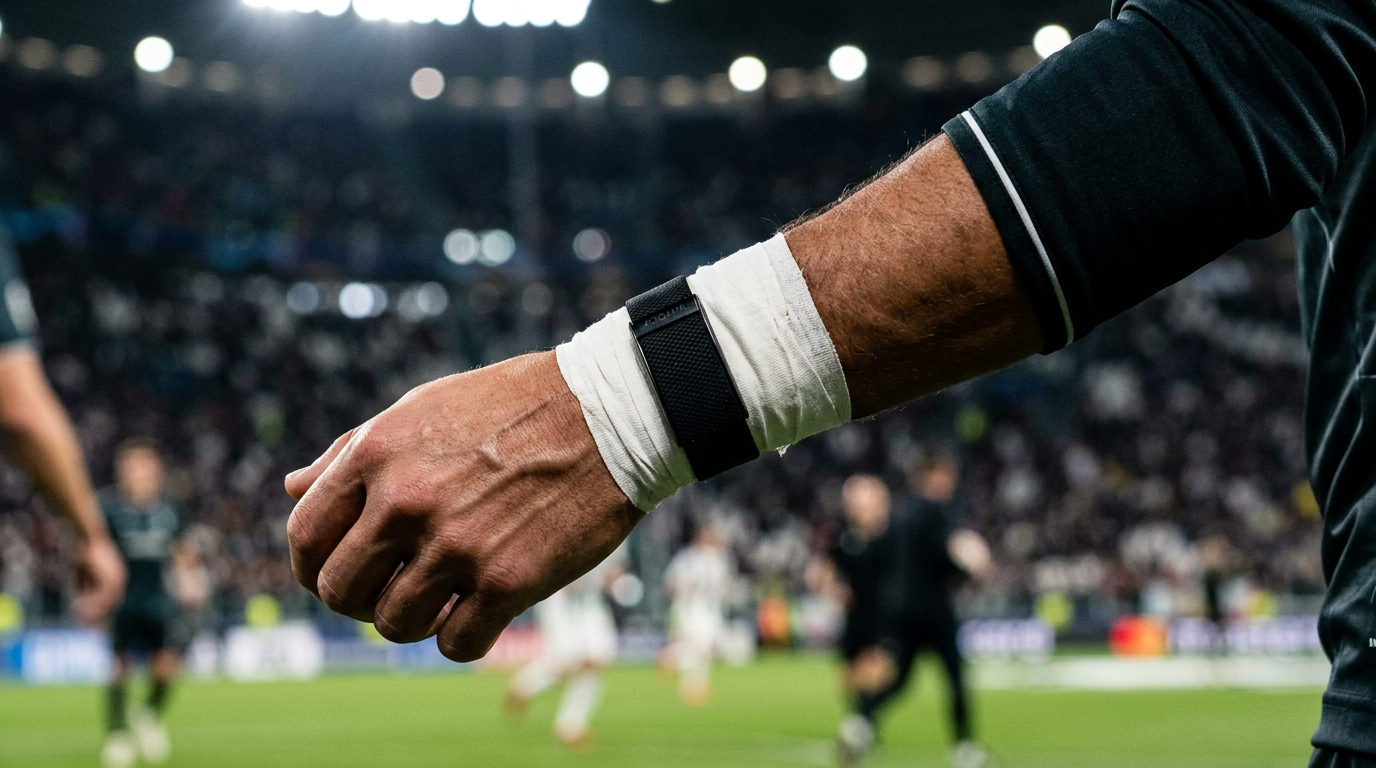
Cristiano Ronaldo was spotted wearing what looked like a watch during warmups before facing Croatia. It's actually a Whoop—a screenless, subscription-only fitness tracker that scores his recovery daily and tells his team whether he can train hard or needs to dial it back.
What Makes Whoop Different
- Recovery score0-100%
- ScreenNone
- Cost modelSubscription only
- FIFA-legalYes
- CR7's roleInvestor & ambassador
Not a Smartwatch—It's a Body Data Engine
The device strapped to Ronaldo's wrist during the Portugal-Croatia warmup wasn't telling time. It was tracking everything happening inside his body—heart rate variability, sleep stages, strain, recovery—and compiling it into a daily readiness score.
Whoop doesn't have a screen. It's not designed to show you the time or let you scroll through apps. It's built purely to collect internal biometric data and send it to your phone. If Ronaldo wakes up in the red zone—low recovery—his coaching staff knows immediately: lighter training that day, or risk injury.
The strap also detects alcohol consumption, calculates mental stress, and operates entirely on a recurring subscription model. Stop paying, and the app locks. The fabric band on your wrist becomes, quite literally, useless textile and plastic.
Why Footballers Love It: It's FIFA-Legal
One reason Whoop has exploded among soccer players is its soft, all-textile design. With no rigid screen or exposed metal, it meets FIFA's strict safety standards. Players can wear it hidden under wristbands, socks, or compression gear during official matches.
It's wearable under boxer briefs, sports bras, compression shorts, even socks—anywhere with a snug fit. Ronaldo often tucks it under his wristband, protected by athletic tape, as he did before greeting Luka Modrić ahead of kickoff.
Who Else Wears It
Aryna Sabalenka (Tennis, World No. 1)
Brand ambassador. Publicly criticized the Australian Open's ban on fitness trackers before matches, saying: 'We use Whoop year-round in every WTA tournament. It's just to monitor my health. I genuinely hope they reconsider.'
Gabi Guimarães (Volleyball, Brazil)
Told reporters: 'It detects sleep quality, all the deep sleep phases. On match days it's good to wear it all day—it calculates heart rate, links physical effort and recovery like a coach. It tells me how many hours I'm sleeping, if I need more rest.'
The Controversy: Banned at Grand Slams
Whoop's popularity has sparked friction. Early this year, the Australian Open prohibited athletes from wearing fitness trackers before Grand Slam matches. Sabalenka, who wears Whoop throughout the WTA season, didn't hold back her frustration in interviews with international media.
The decision highlights a tension in elite sports: how much real-time biometric monitoring should athletes be allowed to lean on during competition? For now, soccer is more permissive—and players like Ronaldo are making full use of it.
FAQ
Can you use Whoop without a subscription?No. Whoop operates entirely on a monthly or annual subscription model. If you stop paying, the app locks and the device stops functioning—it becomes an inert piece of fabric.
Is Whoop allowed during official matches?In soccer, yes—FIFA permits it because of its soft, textile design with no hard screen or metal. Tennis Grand Slams have banned it. Rules vary by sport and tournament.
What does the recovery score actually measure?It combines heart rate variability, resting heart rate, sleep performance, and respiratory rate to generate a 0-100% score. Red zone (low recovery) signals the body needs rest; green means you're ready to train hard.